E-MTB pedals live a hard life: they carry your weight, drag over roots and rocks, and get dunked in mud. In this EMBN video, former UCI Downhill World Cup mechanic Owen Coutts breaks down flats and clip-ins using Funn pedals — here are the key takeaways.
How Clip-In Pedals Work
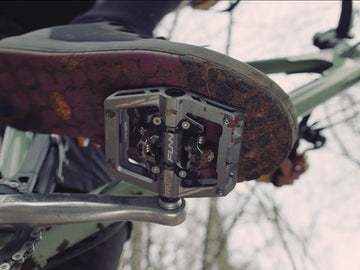
A clip-in pedal uses a spring mechanism on the pedal body and a dedicated cleat bolted to your shoe — the near-universal two-bolt slot standard means most MTB shoes work. Push in to click, twist your heel to release. Early clip-ins were tiny XC-focused designs; downhill racing pushed platforms bigger, not for grip (the cleat carries all your force) but because a larger body is easier to ride unclipped and easier to find when clipping in.
Why are they also called “clipless”? Early MTB pedals used toe clips and straps. When automatic pedals arrived in the early ’90s without the toe clip, they were dubbed “clipless” — even though you clip into them. New to the system? Start with: What Is Clipless Pedals? | Beginner’s Guide
How Flat Pedals Work
A flat pedal is simple on paper — a platform and pins — but the details matter. Modern MTB flats grew from 80s BMX designs: wider, longer and much thinner. The parallelogram profile means a mis-caught pedal rolls into your foot instead of flipping and biting your shin, and a subtle concave lets your foot sink in and lock down. Super low-profile pedals buy extra ground clearance for rocky pedalling sections, though the difference is smaller than most people think.
Tuning: Tension, Float and Pins
Spring tension (clip-in)
Tension is what holds you in. High tension feels locked-in but is harder to click in and out of; low tension is easier both ways — just remember it’s the only thing holding you on rough terrain with dropped heels.
Float (clip-in)
Float is how far the cleat can rotate before it starts to release — some systems offer lots, others around 5° (2.5° each way), which demands precise cleat setup.
Pins (flats — and some clip-ins)
On flats, pin position, length and shape make a big difference underfoot: run longer pins at the front and rear to create a concave pocket that bites into your shoes. (If they can bite shoes, they can bite shins — set up sensibly.) Pins on clip-in pedals aren’t for clipped-in traction; they help you find the pedal and grip it when you’re riding unclipped.
What Matters Most on an E-MTB
Go alloy over resin. An e-MTB will catch roots and rocks; resin bodies take some knocks, but alloy lasts far longer. Buy serviceable. A good pedal is one you can get spares for and rebuild — a worn bushing shouldn’t end a pedal’s life. Funn keeps a full spares listing, and Funn pedals add a grease port: one small Allen bolt lets you flush dirty grease and push in fresh, no teardown needed.

Funndamental Flat Pedals
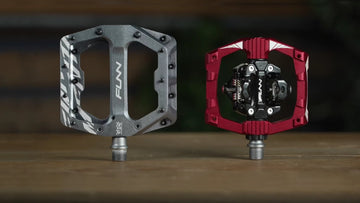
The flat pedal featured in the video — full-size alloy platform with tunable pins, fully rebuildable.
VIEW FUNNDAMENTALThe EMBN Verdict: Flats or Clip-Ins?
The presenters split. The case for flats: total freedom — a foot off in an instant and back on just as fast, which counts double in wet, boggy, technical terrain, and it’s the style behind legendary flat-pedal World Cup wins. The case for clip-ins: a secure, strong pedal stroke with your feet always in the right place, and the way being attached forces you to commit through technical sections instead of bailing to a tripod.
In other words: there’s no wrong answer — only the right match for how and where you ride.

Mamba Clip-In Pedals
Clip on one side, flat on the other — hedge your bets and ride both styles on one pedal.
VIEW MAMBAStill weighing it up? See the full breakdown of every pedal type: Types Of Bike Pedals: How To Choose Your Bike Pedals — or watch the real-world e-MTB speed test: Are Flat Pedals As Fast As Clipless On An eBike?
Built for the abuse an e-MTB dishes out
Alloy bodies, rebuildable internals, grease ports — race-proven pedals since 1997.
VIEW ALL PEDALS